
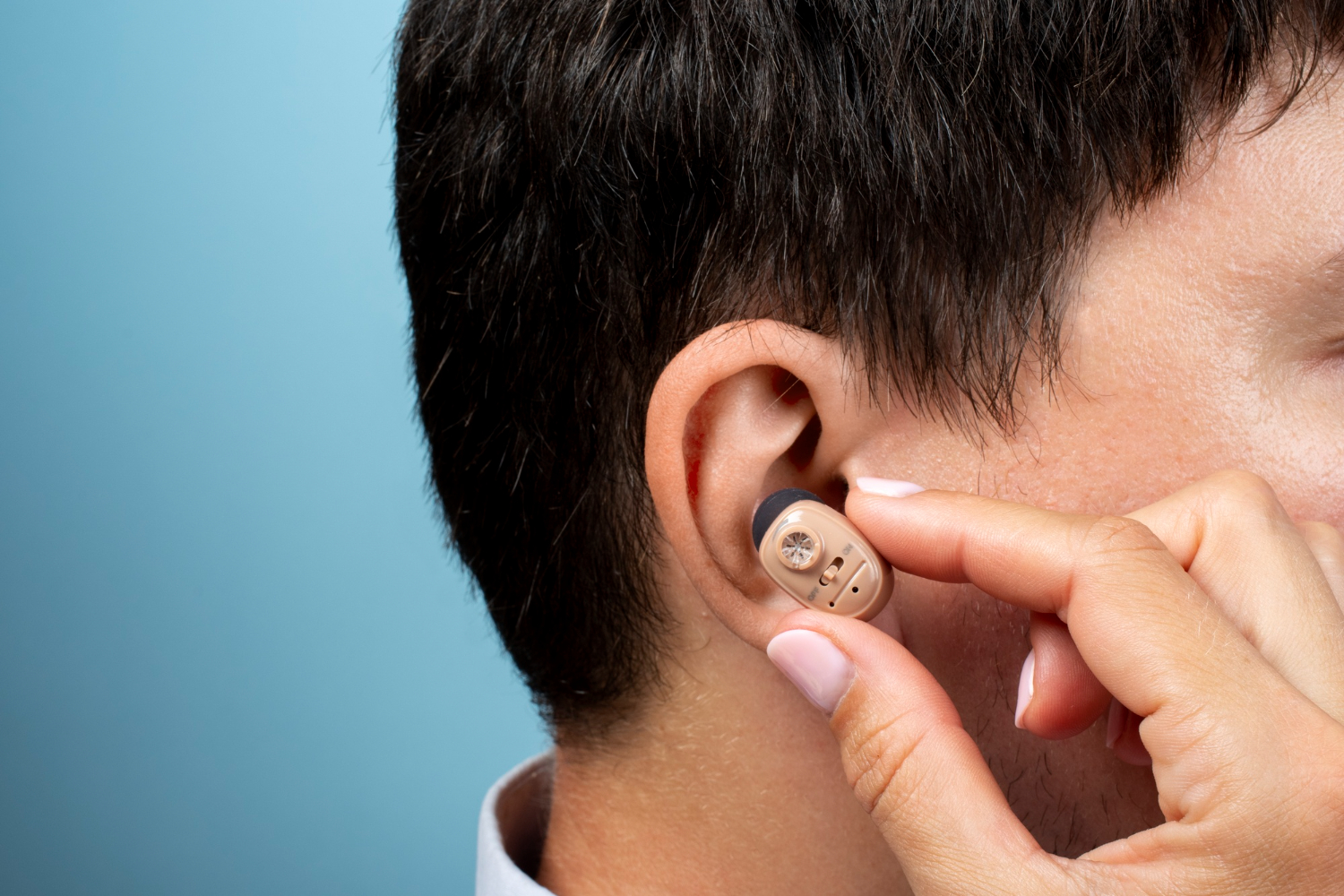
BAHA (Bone Anchored Hearing Aid) is a specialized hearing rehabilitation system that uses bone conduction to transmit sound to the inner ear. It may be considered for selected patients who cannot benefit adequately from conventional hearing aids because of certain conductive, mixed, or single-sided hearing loss conditions.
At Dr. Pareek’s Deafness Clinic and ENT Centre, BAHA evaluation is provided as part of comprehensive hearing and hearing restoration services. A detailed assessment helps determine whether bone-conduction hearing technology may be suitable based on the patient’s hearing profile, ear condition, lifestyle, and communication requirements.
A BAHA hearing system may be considered for selected patients with:
Suitability depends on the individual’s hearing levels, inner-ear function, anatomical condition, and overall clinical assessment.
Unlike conventional hearing aids that primarily amplify sound through the ear canal, a bone anchored hearing system uses bone conduction to transmit sound vibrations toward the functioning inner ear.
The system generally includes a sound processor that captures sounds and converts them into vibrations. These vibrations are transmitted through the skull bone to the cochlea, where they can be processed as auditory information.
This approach can be particularly useful when problems affecting the outer or middle ear prevent sound from being effectively conducted through the normal hearing pathway.
Before recommending BAHA, your ENT specialist may assess:
Tests such as Audiometry help determine the type and degree of hearing loss and assess whether bone-conduction hearing may be appropriate.
A detailed ENT examination helps identify conditions that may interfere with conventional hearing aids.
Previous experience with conventional hearing aids, including the level of benefit and comfort, may be considered.
Communication needs, lifestyle, age, hearing expectations, and the condition of both ears are considered when planning hearing rehabilitation.
For appropriately selected patients, BAHA may help:
Outcomes vary depending on the underlying hearing condition and individual factors.
At Dr. Pareek’s Deafness Clinic and ENT Centre, we provide comprehensive hearing restoration and BAHA evaluation for patients with selected conductive, mixed, and single-sided hearing loss. Our specialists conduct detailed ENT and hearing assessments before recommending an appropriate hearing solution. Audiometry, Tympanometry, OAE, and BERA may be used when clinically indicated to understand the patient’s hearing profile. With extensive experience in complex ear conditions and hearing restoration, our centre focuses on individualized evaluation, realistic expectations, and appropriate hearing rehabilitation planning for patients considering BAHA and other advanced hearing solutions.